Treat Bug and Spider Bites to Prevent Infection
How to Treat Spider and Bug Bites Safely
Spider and bug bites are more common in the summer. The Community Free Clinic is seeing more patients with bites that have become infected.
Knowing what to do early can help reduce itching, prevent infection, and keep the bite from getting worse.
What to Do Right Away
If you get a bite:
Wash the area with soap and water
Apply a cold, wet cloth to reduce swelling
Use hydrocortisone cream to reduce itching
Use an antibiotic ointment, such as Neosporin, to help prevent infection
Take an allergy medicine if itching is severe
When to Seek Medical Care
Some bites can be serious. Get medical help right away if you have:
Trouble breathing
Fever
Severe pain
Stomach pain
Swelling that continues to get worse
Stay Safe This Summer
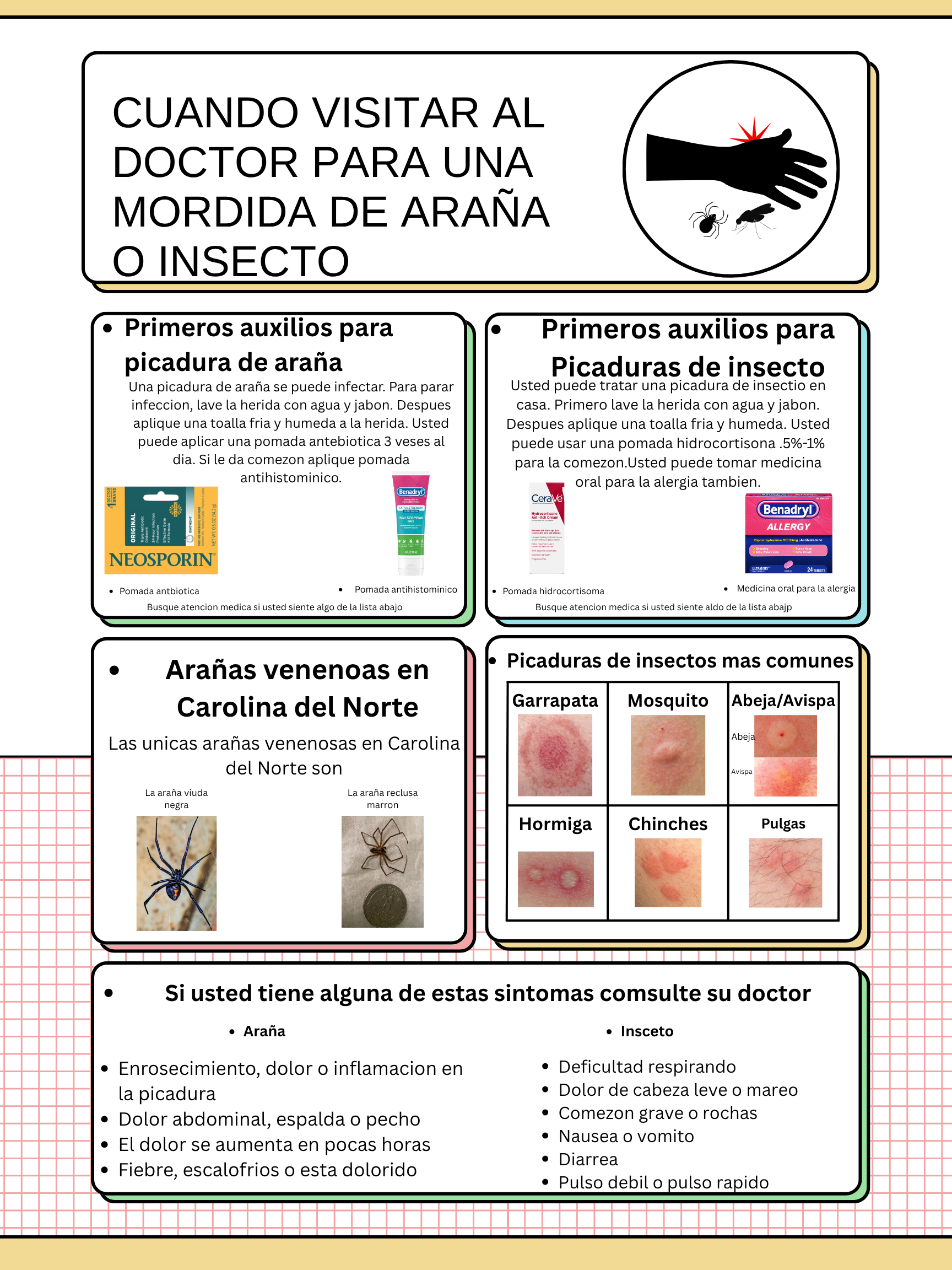
Most bites are not serious, but proper care is important. The infographic below shows common bites in North Carolina and what steps to take.
Español
Cómo tratar picaduras de insectos y arañas
Las picaduras de insectos y arañas son más comunes en el verano. En la Community Free Clinic, estamos viendo más pacientes con picaduras que se han infectado.
Saber cómo tratarlas a tiempo puede ayudar a reducir la picazón, prevenir infecciones y evitar que empeoren.
Qué hacer de inmediato
Si le pica un insecto o una araña:
Lave la zona con agua y jabón
Aplique una toalla fría y húmeda para bajar la hinchazón
Use crema de hidrocortisona para la picazón
Use una pomada antibiótica, como Neosporin
Tome medicina para la alergia si la picazón es fuerte
Cuándo buscar atención médica
Algunas picaduras pueden ser peligrosas. Busque ayuda médica si tiene:
Dificultad para respirar
Fiebre
Dolor fuerte
Dolor en el estómago
Hinchazón que empeora
Manténgase seguro este verano
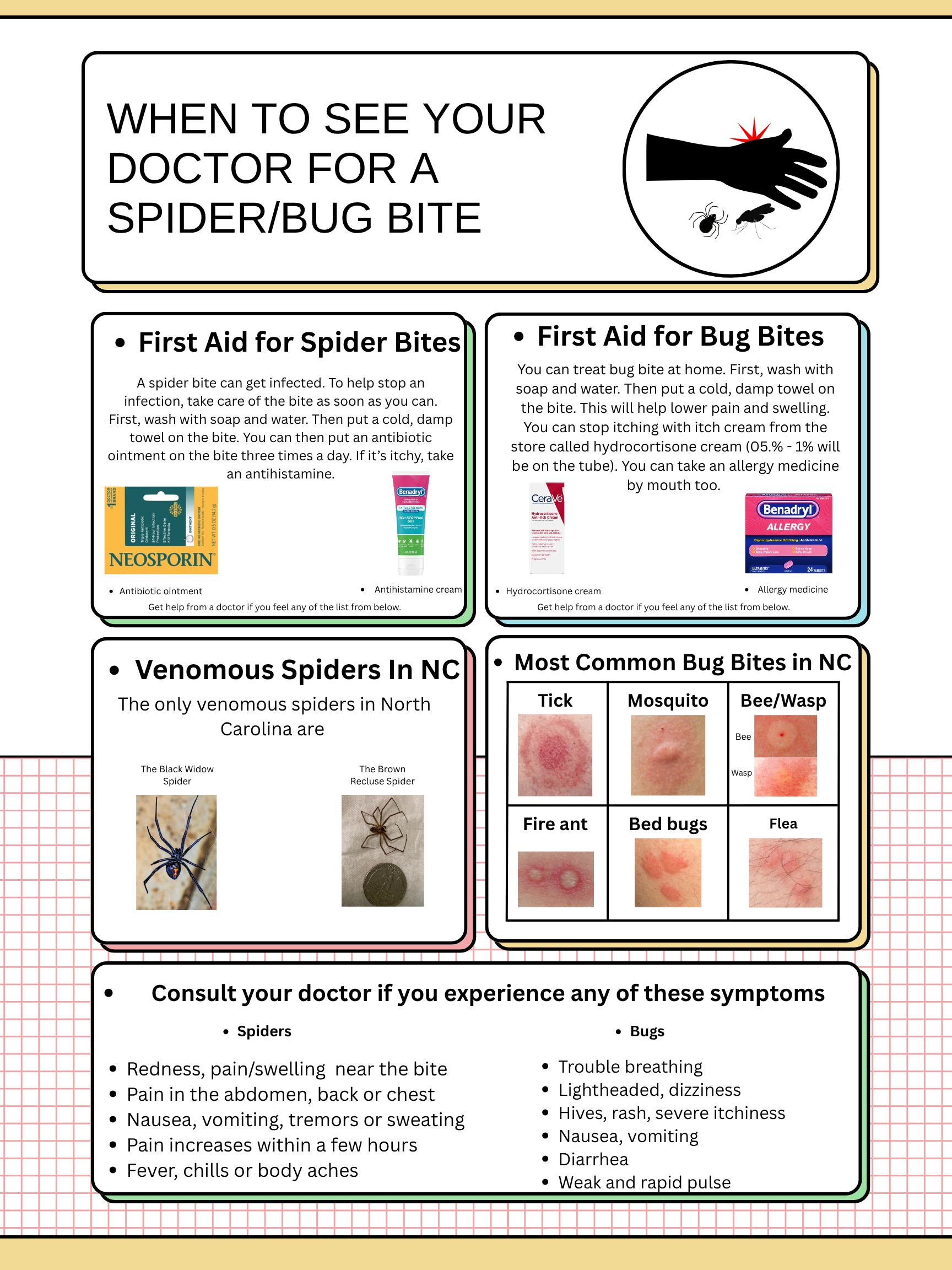
La mayoría de las picaduras no son graves, pero tratarlas correctamente es importante. El cartel de abajo muestra los tipos de picaduras más comunes y qué hacer.